|
Destiny |
|
RAMSGATE Ramsgate began as a fishing and farming hamlet. Its earliest reference is in the Kent Hundred Rolls of 1274-5 as ‘Ramisgate’ or ‘Remmesgate’ from Anglo-Saxon “Hræfn’s geat”, or “raven’s cliff gap”, later to be rendered ‘Ramesgate’ from 1357. The legendary brothers Hengest and Horsa landed in the 5th century (about 450) heralding the Anglo-Saxon age in England. The Roman missionary St. Augustine landed in Ramsgate in 597 establishing the link between England and the Church of Rome that was broken 937 years later in 1534, during the reign of Henry VIII. In 1820 King George IV set off from Ramsgate with the Royal Squadron en route to Hanover. He was so impressed by the hospitality he received at the Kent port that he decreed it be declared a ‘Royal Harbour’. As a result, the Harbour has the unique distinction of being the only Royal Harbour in the United Kingdom. Ramsgate largely developed in the form we know today from 1749 onwards. It was intended as a Harbour of Refuge, following a violent storm in 1748. Later, during the Napoleonic wars, British troops were quartered at Ramsgate before embarking for the continent. Ramsgate’s harbour is a defining characteristic of the town. Ramsgate was a member of the Confederation of Cinque Ports, under the ‘Limb’ of Sandwich, Kent. The construction of Ramsgate Harbour began in 1749 and was completed in about 1850. Because of its proximity to mainland Europe, Ramsgate was a chief embarkation point both during the Napoleonic Wars and for the Dunkirk evacuation in 1940. The eighteenth-century craze for sea-bathing fuelled Ramsgate’s development. Later, in the 1820s, the town became famous as a fashionable watering-hole after the future queen, Princess Victoria, stayed several times. She went on to buy the acclaimed painting ‘Ramsgate Sands’ by W. P. Frith, perhaps as a memento of happy childhood days. The first railway came in 1846. Eventually there was a station on the sands and ever-increasing numbers of visitors flocked to the town. Ramsgate’s guest list is long and full of famous names: artists George du Maurier, James Tissot and Vincent Van Gogh; writers Wilkie Collins and Jane Austen, to name just a few. In 1901, the Isle of Thanet saw the introduction of an electric tram service which was one of the few inter-urban tramways in Britain. The towns of Ramsgate, Margate and Broadstairs were linked by 11 miles of track. In 1915-1916 early aircraft began to use the open farmlands at Manston as a site for emergency landings. The location near the Kent coast gave Manston some advantages over the other previously established aerodromes. During the first World War, Ramsgate was the target of bombing raids by Zeppelin airships. By 1917 the Royal Flying Corps was well established and taking an active part in the defence of England. As RAF Manston the aerodrome played an important role in the second World War and is now called Kent International Airport. In October 1939, the Royal Navy established a Coastal Forces base at Ramsgate called HMS Fervent, which operated Motor Torpedo Boats, Motor Gun Boats and Motor Launches until September 1945. From 27 May 1940, Ramsgate harbour was the main assembly point for the build-up of small craft needed for Operation Dynamo, the evacuation of the British Expeditionary Force from Dunkirk. Once the evacuation was under way, Ramsgate was the second busiest port after Dover, and just under 43,000 men passed through the port, transported onwards by 82 special trains. Ramsgate has had its share of both World Wars. In WWI it had the dubious honour of suffering the first air raids, from Zeppelins, when much damage was suffered. Itwould also have acted as an ‘out port’ to the new ‘secret port’ of nearby Richborough, constructed from scratch to serve as a supply base for the army at the front in France. Despite considerable bomb damage in World War One and World War Two, Ramsgate still played a heroic part in 1940 in sending some of the ‘little ships’ to Dunkirk. The town then welcomed some 80,000 soldiers, safely brought back from France.
|





|
|
| The Journey of the "London" and her passengers
from England to New Zealand in 1842. Thomas & Susannah Chamberlain, together with their four
children sailed aboard the London on this voyage to Port Nicholson. The author is Jenny Robin Jones
a descendant of one of the passengers. The book was published in 2011 by Random House ISBN 978 1
86979 510 8 |
|
|
|
|
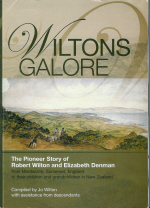
The Pioneer Story of Robert Wilton and Elizabeth Denman from Montacute,
Somerset, England and continued through their children and grand-children in New Zealand.
Mary Wilton married Arthur Joseph Chamberlain, and this is the story & record of her
family. |
|
|
|
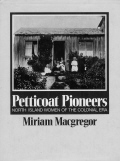
Stories of New Zealand's North Island women of the colonial pioneering
era compiled and recorded for us by author Miriam Macgregor. Two of the women featured in
this book are Susannah Catherine (Bull) Chamberlain and her daughter -in-law (Catherine
McKenzie) Kitty Chamberlain. |
|
|
|
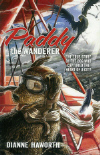
The true story of an Airedale dog who captured the heart of the city of
Wellington during the dark days of depression. Also captured here is Paddy's association with
Blue Taxicab manager, Merlin Chamberlain. The author is Dianne Haworth, a dog-lover and
editor of Animal's Voice, who lives and works in Auckland. |
On the Trail
of
Parker & Walker
Families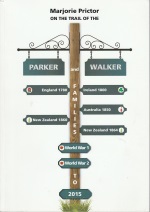
This 2015 self-published family history has been put together by Marjorie Prictor on the trail of Parker and the Walker families who came to New Zealand in the 1860s. Marjorie is a descendant still living in the Northland district of Port Albert where each of these families settled.
Douglas Family
Reunion
1843-1981
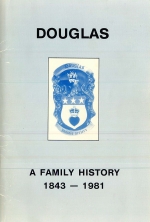
A family history of the Douglas Family in Australia, compiled in 1981 for a family
reunion by sisters Grace Douglas & Rosalie Vanstan of Bendigo, Victoria.
Downloadable as file-093 from the Supplements Page.
|