|
Destiny |
|
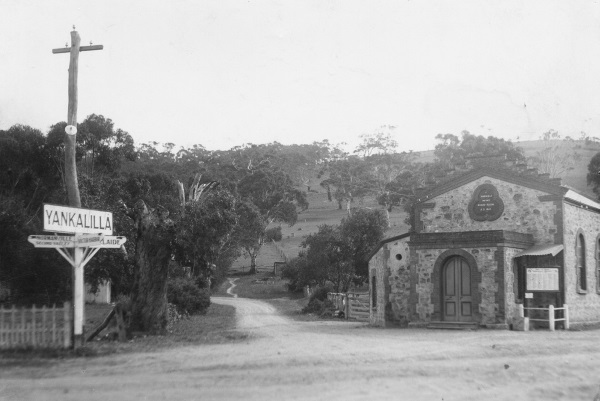
Yankalilla, South Australia The story of Yankalilla is the history of one of the earliest towns in South Australia. It dates back to 1837. In that year, following the fixing of the site of the city of Adelaide, the Government decided the location of five secondary towns. These were Glenelg, Yankalilla, Rapid Bay, Encounter Bay and Nepean Bay, K.I. But in the intervening years things did not work out as was then intended. The story of Yankalilla began long before the white man stole the black man's heritage. It was a happy hunting ground in native nomenclature when the pirates of Kangaroo Island made their periodic raids on the mainland in search of ebony-hued feminine companionship, and in the days before Light came sailing along the coast in the insignificant Rapid, searching for a spot on which to create his model city, and before the bluff Hindmarsh swung the Buffalo down the gulf, and anchored off "the Main" (Glenelg) that hot December day, when he had himself carried ashore from the ship's boat on the back on a sturdy sailor, to the accompaniment of cheers from some three hundred throats of as many settlers who had been waiting for weeks for the arrival of the tardy vice-regent. For Yankalilla as a name is older by far than Adelaide; older even than South Australia. When the future province was absolute terra incognito, before Flinders charted its changing coastline, before there were any South Australian Commissioners, and even before the House of Commons got all hot and bothered over the "to be or not to be" of the proposal to create a colony on absolutely new lines, black brother chased kangaroos, and emus, and iguanas [sic], and other juicy items of his menu, over the hills and across the valleys of this country which he called Yankalilla. So, when the white men came there, they found the place already named for them—and, for once, they had the sense to accept the native christening. But the whites got even later. They called the seacoast section of the town Normanville! The perpetrator of that outrage ought to have been imprisoned for life. Normanville perpetuates the name of Robert Norman, who selected land in the vicinity about 1847. I cannot tell you the why and the wherefore of this family nomenclature— except that it was a bad habit of the early days to plaster the country with more or less hideous cognomens which an ungrateful posterity was supposed to venerate— but doesn't. Were I Koko I should certainly use my snicker-sneer with deadly hate on the vast army of subdividing land agents who roam the country with a christening can in one hand and a dictionary of English or family place names in the other, scattering Norwoods and Woodvilles and Granges, and other like importations indiscriminately over the countryside without regard to the suitability of these proper nouns—highly improper to my way of thinking—to the places dubbed. As to the Minister who permits these crimes, for him I should reserve "something slow and lingering, with boiling oil in it." Why, I wonder, do these gentlemen who subdivide estates display such an utter lack of imagination in the naming of their territorial monstrosities when at the same time they show such vivid imagination in describing them in the prospectuses? Why, they have even sold me blocks of earth which I should be very glad to get rid of now for a quarter of what I gave for them. It's a paradox I am unable to comprehend. Early Land Grants On looking up the official records, I find the first land grant in Yankalilla was made on June 15, 1842, to one Henry Kemmiss, who acquired ninety acres of the country for as many pounds. Nothing is known about this Mr. Kemmiss, but it is of no consequence. For, with all due respect to the sanctity of official data, there happens to be in existence proof of earlier land grants in the district than that officially recorded. You see, in the early days they had a bad habit of constructing Government buildings of wood, and these wooden buildings had a worse habit of catching fire. Probably they never dreamt that a journalistic historian in 1933 would be wanting to know things, or they might have been more careful. However, they burnt down the first Government House, they destroyed Light's office, with all his valuable papers, they reduced Hurtle Fisher's bureau to ashes, and, finally, the old Land Office, with its dry thatched roof went up in smoke, and with it most of the documents relating to the earliest land transactions. It is not surprising, therefore, that today the harassed officials of the L.O. should have to answer, "I dunno," if you bait them with questions about prehistoric land grabs. Town Laid Out Having told you that the first landholder of whom there was any official record was Henry Kemmiss, who purchased ninety acres in 1842. You also need to know that eleven years later Kemmiss (or his heirs) conveyed a portion of this land to Thomas Willson, and it was Willson who laid out Yankalilla as a township of twenty lots on September 9, 1857. There you have the origin of the town, and being on the spot, perhaps John Bird had a hand in it. John Barton Hack. As a matter of fact, the first, or one of the first, holders of land in Yankalilla was our old friend, John Barton Hack. And he wasn't very pleased about it, either. This was the same John Barton Hack who put up a race with Duncan McFarlane for the choice Mount Barker estate in '39 or '40, and had the humiliating experience of seeing his rival coming out of the Lands Office with the grant safely in his pocket as he (Hack) was going in to get it. That was Hack's experience throughout his life—he just missed the good things by inches. To my mind, he was one of the most interesting characters of pioneer times, not because of his successes, but because of his undeserved failures. I will tell you about him. Even Hack's coming to Australia was an accident. His intention, when curiosity prompted him to stop aboard the Buffalo as she was fitting out for the voyage to Australia, was to seek a passage for himself and his family to Madeira, whither he had been ordered for the sake of his health. But Portsmouth nearly a hundred years ago was seething with excitement over the coming founding of South Australia. The most extravagant anticipations of the wealth to be picked up in the new land were entertained. One had merely to get there to find the riches of Croesus. Hack was bitten by the bug. "To Enfer with Madeira," said he, in effect, "it's me and mine for El Dorado in the south." So some time in 1836 he shipped himself, his wife, six children, and his brother Stephen on the Isabella, bound for Launceston. As the ship was about to sail a belated passenger came along, begging the captain to find room for him in an already full boat. He was Sir John Jeffcott. South Australia's first judge, he who, as I related in the Goolwa story, was destined to be drowned at the mouth of the Murray while trying to prove its practicability for navigation. His honour was accommodated on a sofa in the little saloon, and there he had to make the best of things. It is a coincidence that both these passengers, Hack and Jeffcott, subsequently had their names perpetuated in North Adelaide streets—Jeffcott street and Barton terrace. Glenelg: One Month Old Glenelg was not named when John Barton Hack arrived at its anchorage. The little settlement was scarcely a month old, dating its advent from, the coming of Hindmarsh, though we know of course there were people there months before the sailor excellency read the historic proclamation. Hack has left a picture of the bay in January, 1837. The settlers were camped in the sandhills. Mostly they lived in canvas tents. Some, however, had attained the dignity of rush huts. While in Tasmania Hack had purchased sheep and cattle, and a real colonial outfit, and these he brought by special ship to Holdfast Bay. The journey was an adventurous one. They were scarcely out of the Tamar before a gale was tossing the frail craft about like a cork in a whirlpool. Numbers of sheep and cattle died. Stormy conditions continued almost to St. Vincent's Gulf. It took nine days from the Tamar heads to Rapid Bay. At Rapid Bay there was a tiny settlement, and a party went ashore in a ship's boat, "but we found only some rude huts without inhabitants." So, the little ship continued up the gulf towards Holdfast Bay, "but could make no progress in the face of a hot north wind, which prevented the vessel from moving." The sheep and cattle were in such an unhappy state that the vessel was hove-to opposite the sandhills to enable the animals to be landed. The work was suspended towards evening. When morning broke there was not a sheep in sight. The captain was supposed to have sent netting ashore to pen the sheep in. He forgot to do so, and during the night the whole mob had stampeded. Only a few were recovered. Such was Hack's introduction to South Australia. John Barton was not dismayed. He paced the deck, watching the activities of the settlers on shore, as they rolled their packages over the sand to the plain beyond. Then he decided to land himself. And he gave the immigrants the shock of their lives. A Colonial Outfit Hack had brought with him two or three bush hands from Tasmania, as well as a "colonial team" he had purchased there. The wagon and bullocks were landed, the goods brought ashore in a long boat, and the team of eight oxen hauled the lot over the sand to the encampment. The settlers had never seen a team like this before. It created a sensation. They ran along beside the straining beasts, shouting and laughing. All these cattle and sheep were a wonderful acquisition to the young province, for at that time one could almost count the live-stock of the colony on the fingers of both hands. You see, at this time South Australia was only six or seven weeks old. Its stock comprised only one pair of bullocks, a few sheep, a mule, and a donkey, which belonged to the Governor. The survey of the city of Adelaide was only in progress. Hack walked through the bush to the site of the capital, and chose a location for his hut. The Adelaide railway station now covers the site of this early building. Section at Yankalilla I told you Hack was not too pleased when he got his sections at Yankalilla. This is how it happened. When the colony was a few months old the authorities decided to call a meeting of those who had acquired a right to obtain sections in the new province. Hack was one of these. The meeting decided that the choice of sections should be made by ballot. "This," says Hack in a memoir he wrote a few years later, "ended in my three sections being located at Yankalilla, which, for all practical purposes, might have been in Van Diemen’s Land." The trouble was that at that time Yankalilla had not been surveyed. And even if it was, the task of getting there was almost insurmountable. The only practicable route was by sea. By land Sellick's Hill stood opposed in massive bulk against all intruders. It was the Mount Everest of this southern land, and, like Everest, was unconquerable at that stage of the colony's history. The climbing of Sellick's is a story in itself. Sellick's Hill Even today, with modern, high powered motor cars, bitumen roads, and a skilfully surveyed route, you are apt to breathe a sigh of relief when you, without mishap reach the summit of the mighty pimple which the early-day settlers dubbed Sellick's Hill because an early landholder named William Sellick took up land there. But what would you have thought of it if you had come upon it unawares in the pioneer days of '36-7, with a couple of bullocks and a heavy dray, and devil a landmark to guide you over its four miles of stupendous difficulty, and a grade sometimes as steep as one in four? Most of you, I think, would have turned back. For if you went on you would have had to have made your own track — and when you start juggling with a bullock dray on a grade of one in four you are apt to find a little more excitement than you want. Let me tell you how the pioneers did it. Generally, they started out with a pair of bullocks and a dray— and a copious supply of optimism. The latter, perhaps, was the most important thing they carried. Without it they would be helpless— just as today many of us are floundering in a stormy sea of difficulty because we have forgotten the lessons the pioneers taught us, and we do not know how to take off our coats, roll up our sleeves, and wade in determinedly to do battle against depression, pessimism, and the hundred and one dilemmas which go to make up the thing we call life. For the sturdy stock of a century ago every day, year in and year out, was a day of trial, of problems, and of difficulty, which developed ingenuity and self-reliance, and produced a race of men. We who have softened and grown faint-hearted because we have known too much prosperity could not give ourselves a better tonic than to read up the heart-breaking experiences of our forebears. With their bullocks, their drays, and their optimism the men of the late thirties set off across country over boggy land, every step of which was charged with adventure. If the wheels sank too deep and the bullocks could not get them out, there was nothing else for it but to tramp back to the settlement, to borrow a couple more oxen as reinforcements. One camped under the dray at night in the pouring rain, ate a cold breakfast in the morning if there was no dry wood to make a fire, and plodded on into the unknown interior, always keeping a wary eye skinned for the ever-watching blackfellows, who might be friendly or might be hostile—one never knew till one met them. Gradually the enormous bulk of Sellick's Hill loomed up in front, like a ferocious giant determined to guard the secrets which lay behind it. There was nothing to be gained by dropping one's heart into one's boots. That seemingly impenetrable mass had to be conquered. Straight up was the policy. So, blocks and tackle were unloaded from the dray, and hitched to the bullocks, which were then driven up to some convenient tree on the mountainside. The blocks were secured around the massive trunk, and the oxen driven downhill, thus pulling the dray up towards the tree. The wagon was then made secure by means of chocks, another tree selected further up the hill, and the tiresome process repeated. This went on for the best part of four miles. It was difficult, laborious, slow, and dangerous work. But it was the only way. It was because of these difficulties that John Barton Hack did not execute a ceremonial joy dance when he drew three sections at Yankalilla. He never took them up, and so never became a resident. Some two or three years later he sold them. I do not know the purchaser. That, presumably, is one of the secrets which went up in smoke when the old Land Office was destroyed. Mount Damnable How many of you, I wonder, have heard of Mount Damnable, or know where it is? Very few, I fear. But in 1837-8 Mount Damnable was a tougher proposition even than Sellick's Hill. You will recognise it when I tell you it is now called Mount Terrible. Prior to April, 1839, when a search was begun for a new road, the route to Encounter Bay went straight up Mount Damnable, and then across the Myponga River to Yankalilla. The early survey records describe this road as "execrable'"— and any road that was so dubbed in the thirties, when all thoroughfares might have come under that designation, must have been the "baddest kind of bad." Mount Damnable is at the southern extremity of the Aldinga plains, about two miles east of Sellick's. Governor Gawler passed over this road in his tour to the "interior" in 1838. Governor Gawler, however, was what we call today "a bit of a wowser." He did not like dancing, and he did not like swearing, and his Early-Victorian soul was filled with horror at the idea of his surveyors calling any defiant peak, no matter how insurmountable, by the name of "Damnable.'" So he changed the designation to "Mount Terrible.'" And Mount Terrible it remains to this day. Unrehearsed Comedy Perhaps a couple of stories illustrating the "narrowness" of his Excellency or, perhaps, it would be more truthful to say the narrowness of the period at which he lived—would not be out of place here. The first concerns a display of spear throwing by natives which took place on the north park lands at Adelaide, near the site of the present rotunda, shortly after Gawler's arrival in the province. Having heard of the prowess of the aboriginals with the spear, the Governor commanded that an exhibition should be given near Government Hut, close by the banks of the Torrens. The natives were summoned to a great feast—but it was distinctly laid down that they must appear properly clothed, and not in the state of nature in which they habitually roamed the wilds. So, the spear throwers turned up in new red shirts and moleskin trousers, looking uncomfortable, and feeling worse. Nor were matters helped by the gorge of roast beef and such-like fare which preceded the contest. Targets were set up at forty paces, and the two champion throwers, "King John" and "Captain Jack," set to work before a fashionable audience of mixed sexes to show what could be done in the way of native magic. But, never in the history of the championships of Tandarnya—the native name of Adelaide—was there such an awful exhibition of how not to do it. Those natives, acknowledged leaders of the art of deftly puncturing a wallaby on the run at 50 paces, couldn't hit the still targets at 40. The whites jeered, and the natives swore— solid aboriginal oaths, that meant a great deal more than our civilised swear words do. Governor Gawler said straight out that the skill of the abos. had been grossly exaggerated. Then "King John" got mad. Before the scandalised ladies and gentlemen of the viceregal multitude realised what was happening, the Royal "John'" had rid himself of the red shirt and the moleskin trousers, and stood forth in the primitive beauty of his copper-coloured nudity. With a blood-curdling yell, he sent two spears crashing through the centres of the targets. "Him berry goodey," he cried triumphantly, turning to where his shocked Excellency had been— but wasn't. For the Governor was well in the van of a swarm of agitated and shrieking females streaking for the shelter of Government Hut as if their very lives depended on being the first to get there. Father of Native Nomenclature But I do not want you to think I am finding fault with Colonel [George] Gawler. He was, in my opinion, one of the finest Governors South Australia ever had, notwithstanding that my Lord John Russell and the South Australian Commissioners tried to (and did for the time being) make him the scapegoat for those dishonoured bills which brought South Australia to the very knife-edge bankruptcy, it was largely due to his Excellency that South Australia retained so many of its native names. Many a time, when the unimaginative autocrats of those far off days christened newly born towns "Claraburg," "Susanville,""Mariatown,'" and such like abominations after uninteresting and undistinguished relatives. Gawler, with a bigger regard to the fitness of things, substituted the native appellations for the suggested horrors. No, for me it is always "Vive la memoire de Gawler!" Hack was the first man to milk a cow in South Australia. This was an animal he brought with him from Tasmania, and which calved the same day as he reached Holdfast Bay. The circumstance occasioned great interest among the settlers. Incidentally it was Hack, who was himself a member of the Society of Friends, who gave the land on Pennington terrace where the Quakers have their meeting place—almost next door to St. Peter's Cathedral. Field and Barker Probably few of you have ever heard of Alfred Barker and Captain W. G. Field. They were early day land-holders in Yankalilla. Their date is somewhere round '39 or '40. Both were seamen, and both were interesting personalities—Field especially. When Light came sailing along these shores, sticking the nose of the Rapid into odd corners of the coast in his search for a few thousand odd acres of plain on which to plant his metropolis, Field was his second in command, with Pullen of Goolwa fame as the next, in line of succession. Holding his master's ticket, Field had only been induced to play second fiddle to Light on the condition that when Light relinquished the command of the brig it should pass automatically to Field. And this is the way it turned out. After Light had fixed the site of Adelaide he gave up command of the Rapid, and Field took over. He appointed Barker as his first mate. It was Field in the Rapid who took the first consignment of South Australian produce to England. It was Field, also, who shared with Pullen the honour of discovering the Port River — indeed, according to Pullen, the honour belonged to Field more than, to himself. Field, again, was the first man to introduce the orange tree to South Australia. One way and another, Field played a quite important role in the early history of the State. In 1839 Field and Barker decided to abandon the sea. It was then they became partners in a pastoral (cattle) venture at Yankalilla, travelling their stock overland from New South Wales. Field died in the district in 1842, and is buried near Willunga. Soon after the death of his partner, Barker went north. He died in 1880. The Bird Family From Brigstock, John Bird came to Australia in 1839 via the penal system when he was transported to Tasmania for 10 years, allegedly for stealing a sheep. He was charged on the evidence of a known criminal who was given a free ticket to Canada, and where the charge was changed under strange circumstances. Pardoned after eight years of convict service on the 31 October 1845, John spent some time working in Melbourne before taking ship for Adelaide to reunite with two sisters, Lucy and Sarah, a younger brother, Charles and a brother-in-law, John Finedon, who had decided to follow him. His father also followed him via the penal system for stealing a bundle of sticks and died in Tasmania, and an older brother, William, after spending three months in “the house of correction” for poaching, together with his wife Betsy, and children immigrated to New Zealand. Later, another brother Wilson, was also apprehended for stealing a sheep and ended up a convict in Bermuda. John, seems to have rather quickly found and claimed his bride, for about 15 months after his arrival in Adelaide he married Margaret Malthouse on the 3rd December 1850 in the recently built Christ Church, North Adelaide. They moved about 70 kilometres (45 miles) down the coast to settle and raise their family of nine children at Yankalilla. There was no road to travel so they must have gone south in some coastal vessel and landed by boat at Normanville. One wonders if John was deliberately trying to get as far away as he possibly could from officialdom. When arrested John was listed as a (farm) “labourer”, and the prison records note that he was taught the skill of “rug-making”. His death certificate lists his occupation as “stone-mason” and a local history source states that he and Margaret operated a butcher shop in the town. This grew and was expanded by their son Hugh who in 1894 established the butchery 30 kilometres (20 miles) away in the coastal port of Victor Harbor, supplying the ships that used and serviced this port as well as the local trade. In 1911 a new shop was built, that still stands in 2018 in Albert Place, and is easy to spot with its unusual wrought-iron work featuring a stork and anchor design.
The story is told of the day the horse pulling Hugh’s delivery cart, took fright and bolted. Apparently, the cart bounced and slewed its way around the familiar route of Victor Harbor not just once but twice before the horse could be stopped, leaving a trail of meat and sausages to gather dust on the road behind. Hugh’s son Ted set up and ran a bakery in the newly erected Albert Place premises for two years before building and running the ‘Inverary’ guest house on Ocean Street with his wife Elsie about five years after their marriage in 1907.
Looking Backwards There was a time when Yankalilla was one of the most important towns in South Australia. That, for some reason or other, it has not kept pace with the march of progress is evident from the fact that it is smaller today than it was sixty or seventy years ago. In 1866, when the population of South Australia was only 163,000, Yankalilla contained almost 2,000 souls. In 1933, with the State returning nearly 600,000 inhabitants, Yankalilla's contribution had fallen to just 1423. One circumstance which hit the town a staggering blow on its solar plexus was the opening up of the north in the seventies. Its young men, hungry for land, and unable to secure it under the closer settlement system of small holdings then in force in the south, left their fathers and their mothers, their cousins and their aunts, and trekked towards the midday sun. Today the north is filled with the descendants of these southern migrants — and the south languishes. As showing the extent to which closer settlement, was practised in the infant days of the district, there are, on the 600 acres which now form the holding of the chairman of the district council (Mr. J. M. Mitchell) the remains of no fewer than five old houses. Those times, before the north sent forth its magnetic cry of "Land for all — and a bit over," Yankalilla was regarded as a big wheat district, keeping three mills going night and day, grinding flour, which was sent to Melbourne. But the north changed all that. Its larger holdings and opportunities for almost unlimited expansion, made competition on the part of the smaller southern farms impossible, and gradually they reverted to sheep. And they are still sheep lands, with dairying coming fast into its own, owing to the low price of wool. At 3 O'clock in the Morning Those of us who want to travel between Yankalilla and the city to day choose our own time. We jump into a motor car when we are ready, and an hour and a half later are at our destination. But things were different, in the dark ages about which I have been writing. If you wanted to go to town those days — and you didn't if you could help it — you got up about what time the ghosts were becoming active, and splashed about in the dark, the mud, and the rain, until you saw the mail cart lumbering along towards 3 a.m. That would take you as far as Aldinga, and you would get there in time to change into Chambers's little two-wheel cart for Adelaide, provided you had been lucky enough to miss the bog holes which lay in wait for you throughout the route. To facilitate transport, settlers developed a habit of marking these treacherous patches of roadway with lighted lanterns. Billy Winkler was the driver. When you got to Sellick's Hill you got out and climbed that piece of loftiness per foot, for the horses refused point blank to take you up. You see, the old road went straight over the hill, and you had to be something of an acrobat to negotiate it, even on foot. Another old driver or those benighted days was Tom (I think that was his front handle, but I am not sure) Goldsmith. Anyway, you can easily identify him, for he later became a guard on the Glenelg railway. Seventy-odd years ago another coach used to run to the Taliska mines, which were located about 20 miles south of Yankalilla. Taliska in those days was an important place. Several hundred men were employed on the mines, and a '"pub" distributed the necessary tanglefoot to a population that was never happy till it got it. But today Taliska is just a memory. The mines are idle, the pub in ruins, and the cottages are mere tumbled heaps of brick and mortar. It is about 60 years since Taliska gave up the ghost. The education story of Yankalilla is lost in the mists of antiquity. I could not get back beyond 1867, when a Mrs. Donnelly whacked the rudiments of knowledge into the cerebral apparatus of its budding youth. But there was a school of some sort kept by a person now unknown in the early fifties. Today Yankalilla and Normanville are full of old abandoned buildings, one-time stores, and ruins of churches dating from the early days of its occupation. Christ Church, the centre of Anglican worship, was erected in 1857, and is still in use. Some of these things I was told one morning in the office of the district council by Messrs. J. M. Mitchell (chairman of the council), A. McArthur, G. H. Smith, George Mitchell, H. Wenham, W. H. Baker (district clerk), and Mr. and Mrs. G. Putland, senior. Other things, possibly, will be new to them — for my job is to give as well as to take. TOWNS, PEOPLE, AND THINGS WE OUGHT TO KNOW. (1933, May 25). Chronicle (Adelaide, SA : 1895 - 1954), p. 44. Retrieved May 31, 2013, from http://nla.gov.au/nla.news-article90888303
|




|
|
| The Journey of the "London" and her passengers
from England to New Zealand in 1842. Thomas & Susannah Chamberlain, together with their four
children sailed aboard the London on this voyage to Port Nicholson. The author is Jenny Robin Jones
a descendant of one of the passengers. The book was published in 2011 by Random House ISBN 978 1
86979 510 8 |
|
|
|
|
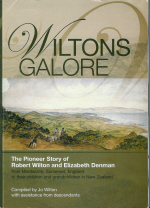
The Pioneer Story of Robert Wilton and Elizabeth Denman from Montacute,
Somerset, England and continued through their children and grand-children in New Zealand.
Mary Wilton married Arthur Joseph Chamberlain, and this is the story & record of her
family. |
|
|
|
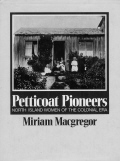
Stories of New Zealand's North Island women of the colonial pioneering
era compiled and recorded for us by author Miriam Macgregor. Two of the women featured in
this book are Susannah Catherine (Bull) Chamberlain and her daughter -in-law (Catherine
McKenzie) Kitty Chamberlain. |
|
|
|
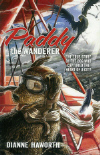
The true story of an Airedale dog who captured the heart of the city of
Wellington during the dark days of depression. Also captured here is Paddy's association with
Blue Taxicab manager, Merlin Chamberlain. The author is Dianne Haworth, a dog-lover and
editor of Animal's Voice, who lives and works in Auckland. |
On the Trail
of
Parker & Walker
Families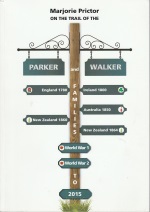
This 2015 self-published family history has been put together by Marjorie Prictor on the trail of Parker and the Walker families who came to New Zealand in the 1860s. Marjorie is a descendant still living in the Northland district of Port Albert where each of these families settled.
Douglas Family
Reunion
1843-1981
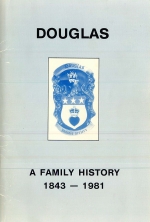
A family history of the Douglas Family in Australia, compiled in 1981 for a family
reunion by sisters Grace Douglas & Rosalie Vanstan of Bendigo, Victoria.
Downloadable as file-093 from the Supplements Page.
|