BRIGSTOCK, NORTHANTS
Centuries before the Bird family arrived on the scene the settlement of
“Brigstock” was to be found in a Forest that originally stretched from Stamford to Northampton. Known by the
name Rockingham Forest it was designated a royal hunting forest by William the Conqueror. Brigstock mentioned as ‘Bricstoc’ in the Domesday Book-A.D.1087) may mean
"the stockade of birch trees." The earliest definite traces of human
habitation in the parish date from the Early Bronze Age. A skeleton found in a sand pit was dated c 1500
BC. There are considerable traces of habitation during the Roman
times. The present village dates from Saxon times and it was then a place of some importance in the
Forest.
In the late Middle Ages Brigstock became
the largest village in the Rockingham Forest and it stood between the two vast royal parks of Geddington and
Farming (Fermyn) Woods.
In 1466 Edward IV granted Brigstock a market on Saturdays and two fairs a year, on St Georges and St Martins
Days. King James I in 1604 granted a licence for Markets on
Thursdays and for three fairs a year on St Marks, St Bartholomew’s and St Martins days. In 1830 it is reported that the market had fallen into disuse but the fairs
were still being held.
Today
Brigstock, is a large village and parish in Northampton-shire. The village stands on an affluent of the river
Nen, near Rockingham Forest, 5½ miles NNW of Thrapston, 7½ NE of Kettering, and 5 ENE from Geddington station on
the M.R. It has a post, money order, and telegraph office under Thrapston, and fairs on 25 April, 4 September,
and 22 November, and was once a market-town. The parish comprises 6147 acres; population of the civil parish,
1035; of the ecclesiastical, with Stanion, 1347. Farming (Fermyn)
Woods, the seat of Lord Lyveden, and Brigstock Manor House, the property of the Duke of Buccleuch, are chief
residences. The church is partially Norman and good, and there are Congregational and Primitive Methodist chapels.
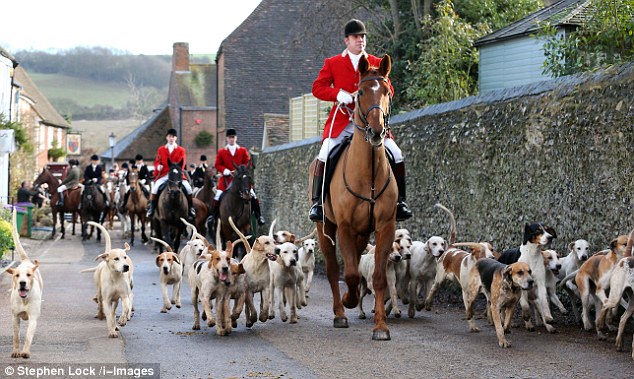
Here are the kennels of the Woodland Pytchley foxhounds.
The population of Brigstock has been fairly steady for hundreds of years
at about 1000. It was expected to reach 2000 in the
1980s. However, at the time of the 2001 census, the parish population was 1,329 people. There has always been a certain amount of enterprise in Brigstock;
principally in the industries of a small market town.
The first Bird ancestor captured in our
time capsule is William who lived during the reign of Elizabeth I. The date of his marriage to Ellen in 1595
means that he was likely born before 1575 and this also means that as a teenager he lived through the threat of
the Spanish Armada in 1588. Just eight years into their marriage the old virgin queen died in 1603. This brought
a massive change as Scotland’s Stewart king, James VI was installed as James I of England, Scotland and Ireland.
The dissatisfaction that this introduced, brought about the departure of the Pilgrim Fathers in the Mayflower to
the ‘New World’ in 1620, and triggered England’s civil war [1642-1651] between Parliamentarians
(Roundheads) and Royalists (Cavaliers). The decisive
battle of Naseby in this war was fought about 30 kilometres west ofBrigstock. To cap off
an eventful life, William died in 1553, just 8 years after the execution of the unpopular Charles I, whose
insistent belief in the divine right of kings did nothing to keep his head on his shoulders.
Nearly 230 years and seven generations
later we arrive at the family of Edward Bird born about 1781 who married Sarah Whitwell in 1809, lived in
Brigstock, and went on to have nine children. After Sarah’s death in 1835, aged 45, from what was probably a
complicated birth, the family rapidly fractured. Two of their sons and Edward himself became convicts, and as a
direct result five of the seven surviving children ended up on the other side of the world in either Australia
or New Zealand and a sixth in America. The only one to remain behind, married a local lad, but appears to have
lived a gin-sodden and childless existence, whose cause of death at the age of 57 was cirrhosis of the liver.
I suspect that this family was just
typical of many across the country during this period of history, when Britain’s population was exploding far
beyond the bounds of the grossly inadequate and struggling infrastructure, that was unable to support such
growth.
To follow in more detail the fortunes of this
family, and in particular John Bird, the first son to receive the sentence, “transported beyond the seas” check
these on-site articles:
Particular Places - Yankalilla, South
Australia.

And the PDF document - Far Side of the
World-IV.
|