|
Destiny |
|
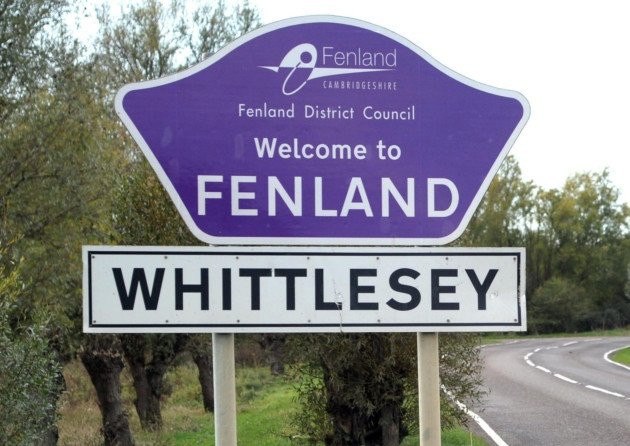
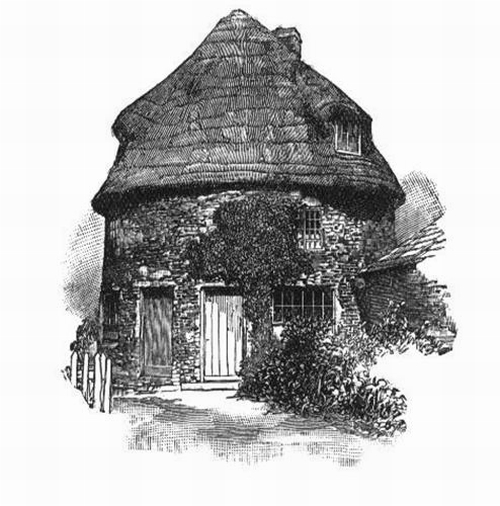
Whittlesey is a town in the north-west of the District of Fenland. 6½ miles east of Peterborough and 11 miles west of March, it's 'island' rises to just 26 feet above sea level, and is about 3 miles long and ½ mile broad. Whittlesey features in the Domesday Book as Witesie, but the name probably derives from Whittle's Ea, where Ea is the Saxon term for 'an island'. This land was once owned by a man named 'Whittle', the name therefore literally translates as 'Whittle's Island'. In the Middle Ages there were once two important manors here as indicated by the two churches Whittlesey St. Mary and Whittlesey St. Andrew and there were many 'guilds' in the town. The town is situated at the intersection of the roads from Peterborough to March with those from Ramsey, Thorney and Crowland. The latter (B1040) is planted with trees on the Thorney side of the town. Whittlesey has an extensive range of architectural styles. The most important buildings are the manor house and the Butter Cross.
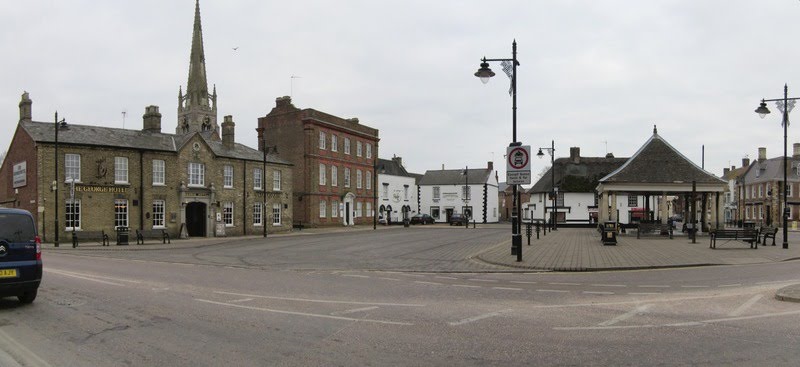
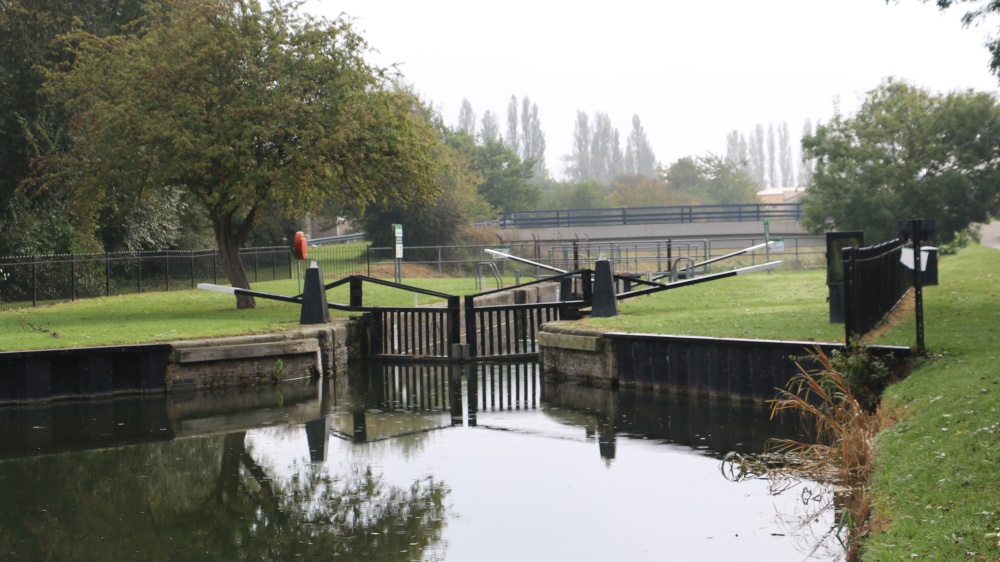
The Buttercross situated in the centre of the Market Place dates back to 1680, originally it was a place for selling goods at market. In the 1800s It was saved from demolition by a local businessman donating slate tiles for the roof. It serves as a bus shelter today and is one of the town's most famous landmarks. The right to hold a market and three annual fairs was granted to the town in 1715. Friday is still market day in Whittlesey, but the town's close proximity to Peterborough limits its potential growth. Whittlesey has had many public houses; at one time the town was reputed to have had 52 - one for each week of the year! Now there are 10 - not even enough to provide one for each month of the year. The town has three 80-metre high wind turbines. They power a local factory's plant, reducing their electricity bills by 60%. Whittlesey appears in the Cartularium Saxonicum (973 A.D.) as Witlesig, in the Domesday Book as Witesie, and in the Inquisitio Eliensis (1086 A.D.) as Wittleseia. The meaning is "Wit(t)el’s island", deriving from either Witil, "the name of a moneyer", or a diminutive of Witta, a personal name; + "eg", meaning "'island', also used of a piece of firm land in a fen." [3] Before the draining of the fens, Whittlesey was an island of dry ground surrounded by the marshy fens. Excavations of nearby Flag Fenindicate thriving local settlements as far back as 1000 BC. At Must Farm quarry, a Bronze Age settlement is described as "Britain's Pompeii" due to its relatively good condition. In 2016 it was being excavated by the University of Cambridge's Cambridge Archaeological Unit. At Must Farmat least five homes of 3,000 years in age have been found, along with Britain's most complete prehistoric wooden wheel, dating back to the late Bronze Age. In more recent times Whittlesey was linked to Peterborough in the west and March in the east by the Roman Fen Causeway, probably built in the 1st century AD. Roman artefacts have been recovered at nearby Eldernell, and a Roman skeleton was discovered in the nearby village of Eastrea during construction of its village hall in 2010. [6] The town's two parishes of St Mary's and St Andrew's were controlled by the abbeys in Thorneyand Ely respectively until the Dissolution of the Monasteries(c. 1540). The two parishes were combined for administrative purposes by the Whittlesey Improvement Act of 1849. Despite the proximity of Peterborough, Whittlesey is in the Diocese of Ely. Until it was drained in 1851, nearby Whittlesey Mere was a substantial lake surrounded by marsh. According to the traveller Celia Fiennes, who saw it in 1697, the mere was "3 mile broad and six mile long. In the midst is a little island where a great store of Wildfowle breed.... The ground is all wett and marshy but there are severall little Channells runs into it which by boats people go up to this place; when you enter the mouth of the Mer it looks formidable and its often very dangerous by reason of sudden winds that will rise like Hurricanes...." The town is still accessible by water, connected to the river Nene by King's Dyke, which forms part of the Nene/Ouse Navigation link. Moorings can be found at Ashline Lock, alongside the Manor Leisure Centre's cricket and football pitches. Whittlesey was noted for its brickyards, around which the former hamlet of King's Dyke was based for much of the 20th century, although only one now remains, following the closure of the Saxon brickworks in 2011. The local clay soil was also used to make mud boundary walls during a period in which there was a tax on bricks. Some examples of these roofed walls still stand today and are unique in Fenland. Whittlesey was infamous for its number of public houses; folklore dictates that, at one time there were 52 of them – one for each week of the year. In 1797, a local farmer noted in his diary "they like drinking better than fighting in Whittlesea." In other history, Whittlesey was an important trade route in the late Bronze Age (about 1100–800 BC), where civilisations traded with many places, including the Balkans. Such evidence is clear at the important archaeological site of Must Farm, where log boats, roundhouses, bowls with food in them, and the most complete wooden wheel were housed. Churches St Mary's Church is 15th century, but the majority of the building is later. The church has one of the largest buttressed spires in Cambridgeshire. It also contains a chapel which was restored in 1862 as a memorial to Sir Harry Smith. St Andrew's Church is a mixture of the Perpendicular and Decorated styles of Gothic, and has records back to 1635. The Market Place The Market Place is the site of the town's market, held every Friday. A right to hold a weekly market was first granted in 1715, although there have been several periods since then during which the market did not function, for example from the late 1700s until about 1850. In the centre of the Market Place is the Buttercross, dating back to 1680. Originally a place for people to sell goods at market, the structure was considered useless in the 1800s and was only saved from demolition when a local businessman donated some slate tiles for the roof. It served as a bus shelter, until the controversial relocation of bus services from the Market Place to a purpose-built terminal in Grosvenor Road.
The Bowland and Lovell families lived here in Cambridgeshire in the 1850s. After a double wedding, July 5th 1852, two couples Henry & Mary Jane (Lovell) Bowland, and William & Martha (Bowland) Lovell bid farewell to their families and friends, boarded the Thames. They sailed November 5th, bound for Melbourne, Australia. Through their children connections were made with the Michael Family from Ullapool, and the Douglas Family from County Down.
|


|
|
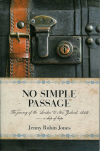
| The Journey of the "London" and her passengers
from England to New Zealand in 1842. Thomas & Susannah Chamberlain, together with their four
children sailed aboard the London on this voyage to Port Nicholson. The author is Jenny Robin Jones
a descendant of one of the passengers. The book was published in 2011 by Random House ISBN 978 1
86979 510 8 |
|
|
|
|
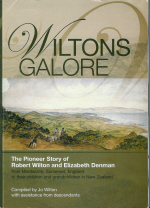
The Pioneer Story of Robert Wilton and Elizabeth Denman from Montacute,
Somerset, England and continued through their children and grand-children in New Zealand.
Mary Wilton married Arthur Joseph Chamberlain, and this is the story & record of her
family. |
|
|
|
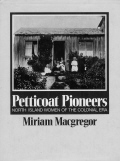
Stories of New Zealand's North Island women of the colonial pioneering
era compiled and recorded for us by author Miriam Macgregor. Two of the women featured in
this book are Susannah Catherine (Bull) Chamberlain and her daughter -in-law (Catherine
McKenzie) Kitty Chamberlain. |
|
|
|
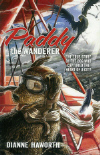
The true story of an Airedale dog who captured the heart of the city of
Wellington during the dark days of depression. Also captured here is Paddy's association with
Blue Taxicab manager, Merlin Chamberlain. The author is Dianne Haworth, a dog-lover and
editor of Animal's Voice, who lives and works in Auckland. |
On the Trail
of
Parker & Walker
Families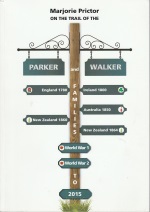
This 2015 self-published family history has been put together by Marjorie Prictor on the trail of Parker and the Walker families who came to New Zealand in the 1860s. Marjorie is a descendant still living in the Northland district of Port Albert where each of these families settled.
Douglas Family
Reunion
1843-1981
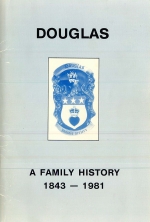
A family history of the Douglas Family in Australia, compiled in 1981 for a family
reunion by sisters Grace Douglas & Rosalie Vanstan of Bendigo, Victoria.
Downloadable as file-093 from the Supplements Page.
|